 Listicle
Is Your Janitorial Service Declining? 7 Warning Signs
Last Updated: October 25, 2026
Quick Summary
A declining janitorial service shows warning signs like cleaning quality that drops and stays down, missed tasks and incomplete checklists, repeated complaints, slow responses, high staff turnover, and rising prices without matching value. Track complaints and inspections in a log for one month, then send written notice with a correction deadline before escalating.
- Walk your building at the same time each week and note what you see.
- Ask for completed cleaning checklists from the past two weeks.
- A score below 3 in any category for two months triggers a formal conversation.
- Require a corrective action plan within three business days of written notice.
- Switch providers only when documented issues survive two formal corrective cycles.
Table of Contents
- 7 Signs Your Janitorial Service Is Declining
- Sign 1: Cleaning Quality Drops and Stays Down
- Sign 2: Missed Tasks and Incomplete Cleaning Checklists
- Sign 3: Complaints from Employees, Clients, and Visitors
- Sign 4: Slow Response and Unanswered Requests
- Sign 5: Dirty Floors, Restrooms, and Neglected Reception Areas
- Sign 6: New Faces Every Month and High Staff Turnover
- Sign 7: Rising Prices Without Matching Value
- How to Evaluate a Janitorial Service Before Problems Spread
- The Commercial Cleaning Quality Checklist Every Facility Manager Needs
- How to Address Poor Cleaning Service: A Fair Escalation Process
- Check the Contract, Scope, and Service Level Agreement
- When to Switch Cleaning Providers and How to Transition
- Get a Free Quote from CBS Facility Maintenance
- Frequently Asked Questions
7 Signs Your Janitorial Service Is Declining
Most facility managers spot a declining janitorial service long after the damage is done.
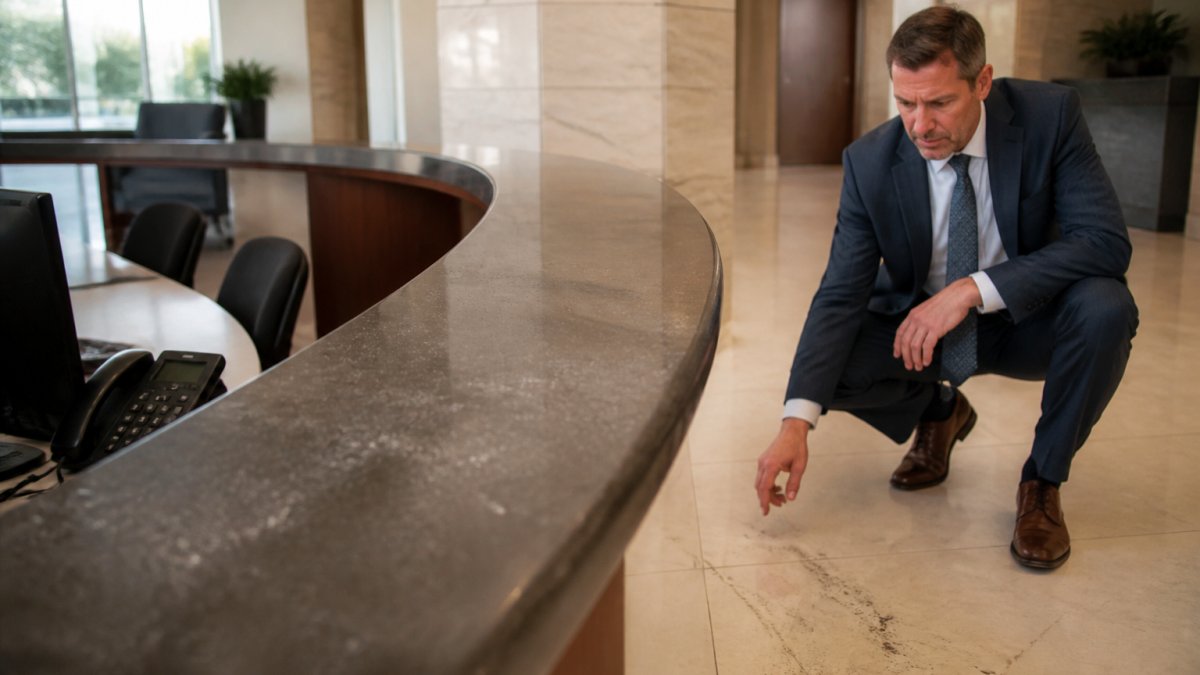
A declining janitorial service is a commercial cleaning provider whose quality, communication, or reliability has slipped below the standard you agreed to.
Below, we cover each warning sign, how to verify it, and what to do about it, including a fair escalation process and a transition plan that protects your facility if the relationship has to end.
Sign 1: Cleaning Quality Drops and Stays Down
The first sign is a quality dip that never recovers. One off week happens to every cleaning provider.
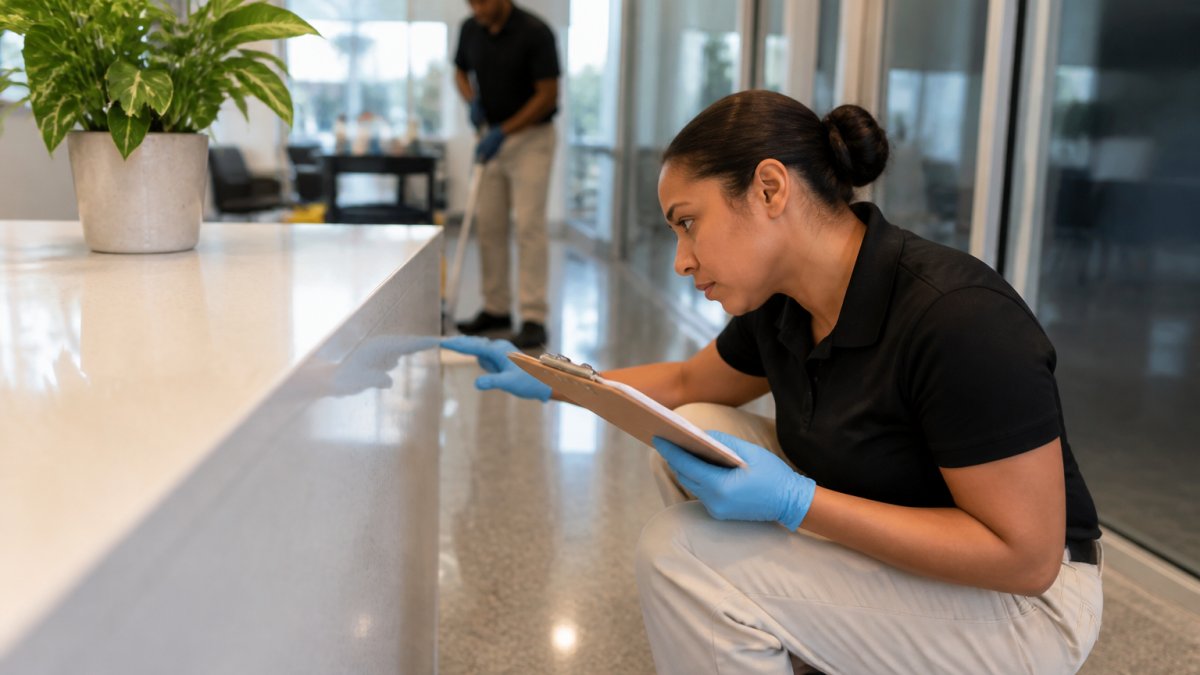
Walk your building at the same time each week and note what you see. Readers can review commercial janitorial services to see what a proper scope of work should include.
Sign 2: Missed Tasks and Incomplete Cleaning Checklists
A cleaning checklist exists so nothing gets skipped when the crew is short-staffed or rushed. When tasks disappear from that list, the service is managed by memory instead of a documented schedule.
Ask for the completed checklist for the past two weeks. A reputable provider keeps daily records of what was cleaned, when, and by whom. If the answer is "we don't track that," you have found the root cause of every other complaint here.
Common missed tasks we hear about from facility managers:
- Trash liners not replaced in restrooms and break rooms
- High-touch surfaces wiped but not disinfected
- Floors swept but never mopped
Sign 3: Complaints from Employees, Clients, and Visitors
Complaints are the most reliable early warning system you have. Employees mention the restroom, clients notice the reception area, and visitors form a first impression within seconds.
Track complaints in a simple log for one month, noting date, location, and issue. A cluster around one area usually means a staffing or scheduling gap, not a one-time miss.
Sign 4: Slow Response and Unanswered Requests
Response time tells you more about a cleaning company than any sales pitch. Send a routine request, such as restocking supplies or spot-cleaning a spill, and time how long it takes to get a real answer.
If your point of contact changes without notice or your emails go to a shared inbox nobody owns, requests will keep disappearing.
Sign 5: Dirty Floors, Restrooms, and Neglected Reception Areas
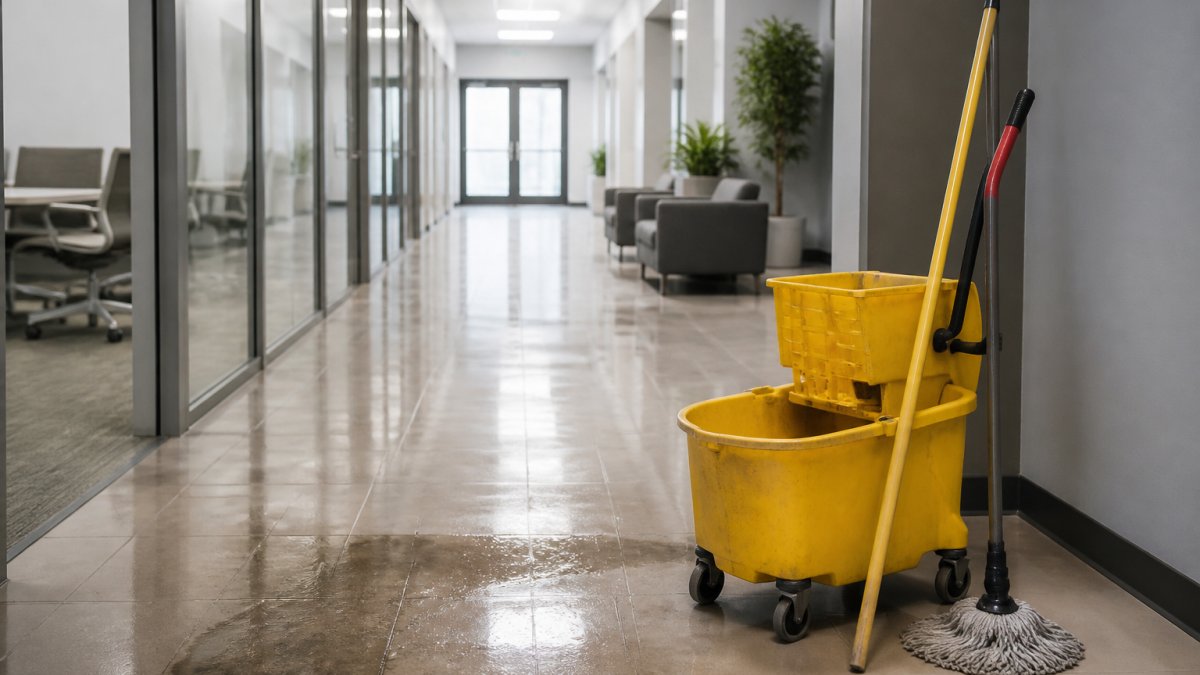
Visible dirt is the sign everyone notices but nobody reports until it affects business.
Do a 15-minute walkthrough once a week and score these areas on a simple scale. Restroom cleanliness, floor condition, and conference room readiness tell you 80% of what you need to know.
Sign 6: New Faces Every Month and High Staff Turnover
Staff turnover is the quiet cause behind most inconsistent cleaning. When you see unfamiliar cleaning personnel every month, training resets, routines break, and quality drops with each new hire.
Ask your provider how they retain staff and who supervises the crew on site. A stable crew knows your building, schedule, and unusual spaces; constant turnover means your facility is being used as a training ground.
Sign 7: Rising Prices Without Matching Value
Rising prices are not automatically a red flag. Costs go up. What matters is whether the price increase comes with matching value.
If your invoice climbs while quality falls, you are paying more for less. Compare the current scope of work against what you are charged and ask for a written explanation of any increase.
| Sign | What to Check | Fast Fix |
|---|---|---|
| Quality drop | Weekly walkthrough notes | Request a written corrective plan |
| Missed tasks | Completed checklists | Require daily sign-off |
| Complaints | One-month complaint log | Escalate with documented dates |
| Slow response | Timed test request | Confirm a named contact |
| Visible dirt | Scored area walkthrough | Set a re-clean deadline |
| Staff turnover | Crew names over 90 days | Ask about retention and supervision |
| Rising prices | Scope vs. invoice | Request written justification |
How to Evaluate a Janitorial Service Before Problems Spread
Evaluating a janitorial service means scoring the provider on measurable criteria instead of gut feel. Use a simple scorecard: quality, communication, reliability, staffing stability, and value. Rate each from 1 to 5 every month.
A score below 3 in any category for two consecutive months triggers a formal conversation. This turns vague frustration into evidence you can act on and gives the provider a fair chance to correct course before you consider replacing them.
The Commercial Cleaning Quality Checklist Every Facility Manager Needs
A commercial cleaning quality checklist gives you a shared standard to inspect against. Build yours around the areas that affect how your building is perceived and how healthy it stays.
- Entrance floors clean and free of scuff marks
- Reception desk and lobby surfaces dust-free
- Restrooms sanitized, stocked, and odor-free
Inspect against this list weekly and share results with your provider. Documented inspections are the fairest way to hold a contractor accountable.
How to Address Poor Cleaning Service: A Fair Escalation Process
Addressing poor cleaning service starts with documentation, not confrontation. The goal is a record that is fair to the provider and defensible if the relationship ends. Facility managers who win these disputes log deficiencies the same way every time, set written correction deadlines, and verify the fix held before escalating.
Step 1: Standardize how you log deficiencies
Use one form for every issue so the record is comparable. Capture the date and time of inspection, the exact location (floor, room number, or zone), the missed task, a photo, and the inspector's name. A shared spreadsheet with one row per deficiency and a running count by category turns a pile of complaints into a pattern you can present.
Step 2: Send a written notice with a correction deadline
Email your named contact, not a general inbox. State the deficiency, reference the scope-of-work line it violates, attach the photo, and set a specific correction deadline, 24 to 48 hours for routine tasks, same-day or next-service for recurring or safety-related issues. Ask for written confirmation that the correction was made.
Step 3: Request a corrective action plan
A corrective action plan should answer three questions in writing: what caused the miss, what will change, and by when. "We will remind the crew" is not a plan. A real plan names the supervisor responsible, the new check or sign-off, and the date the change takes effect.
Step 4: Verify the fix held
Review at your next two scheduled inspections, not just the next one. A fix that holds for two weeks is a real correction; one that holds for two days is a patch. Record the result in the same log so the history is complete.
Step 5: Escalate in writing to management
If the issue recurs after a corrective action plan, escalate to the provider's management with the full record: the log, the notices, the plan, and the verification results. State plainly what outcome you need and by what date, and review the contract's termination and cure provisions before the conversation.
What a fair escalation timeline looks like
A workable default: log the issue on inspection day, send written notice within one business day, require a corrective action plan within three business days, verify over the next two inspections, and escalate to management if the issue recurs within 30 days. Adjust the windows to your contract, but keep them consistent.
Check the Contract, Scope, and Service Level Agreement
Before you escalate further, read the service agreement. The scope of work defines what your provider must deliver, and the service level agreement defines how fast they must respond.
Check three things: the frequency of each task, the response-time commitments, and the termination terms. If the contract does not match what you were promised, that gap is your use. Readers can review the cost of breaking commercial cleaning contracts to understand the consequences of ending an agreement.
When to Switch Cleaning Providers and How to Transition
Switching cleaning providers makes sense when documented issues survive two formal corrective cycles. At that point the problem is not the crew but the management behind it. Readers can see reasons to switch to CBS Facility Maintenance as a replacement provider. But deciding to switch and actually switching are two different projects, and the second is where facilities get into trouble.
Confirm the trigger before you move
Use a simple test: has the same category of deficiency recurred after a written corrective action plan and failed verification at the next two inspections? If yes, you have a documented case. If the issues are scattered and one-off, you likely have a scope or communication problem, and a switch will not fix it.
Read the termination and cure clauses first
Before you give notice, confirm the notice period, any cure window the provider is entitled to, and whether early termination carries a fee. Give notice in the form the contract requires, written, to the named recipient, with the effective date stated.
Build a transition plan that protects continuity
A clean transition is mostly logistics. Work through this list before the new provider's first service:
- Site instructions. Hand over your quality checklist, floor plans, restricted areas, alarm codes, and any building-specific quirks (elevator pads, freight entrance rules, after-hours access).
- Access and credentials. Coordinate key, fob, and badge handoff so the new crew can enter on day one and the outgoing crew's access is revoked on the last day.
- Supply and equipment inventory. Decide what stays with the building and what leaves with the provider. Consumables like liners, soap, and paper are often building-owned; equipment is usually provider-owned unless your contract says otherwise.
Set a 30-day check-in with the new provider
Schedule a review at 30 days against the same scorecard you used for the old provider. Compare inspection pass rate, missed-task count, and complaint volume. If the new provider starts below the old baseline, raise it immediately, the first month sets the standard.
Get a Free Quote from CBS Facility Maintenance
If your current provider is showing these signs, we can help you fix the problem or replace it. CBS Facility Maintenance is family-owned with over 20 years of experience, a single point of contact, and no long-term contracts. See our full range of services or ask us anything to get started.
Frequently Asked Questions
What are the most common weaknesses of a cleaning company?
The most common weaknesses are inconsistent cleaning quality, missed tasks, slow communication, and high staff turnover. Many providers also struggle with unclear scope of work, which leads to disputes about what is actually included. A strong janitorial service should have a documented cleaning checklist, a named point of contact, and regular site inspections. If your provider cannot show you these, that is a warning sign worth acting on.
When should you replace a commercial cleaning company?
Replace your commercial cleaning company when problems persist after you have documented them and given the provider a fair chance to fix them. If you see repeated missed tasks, declining cleaning quality, unanswered requests, or staff turnover that disrupts service consistency, it is time to consider a switch. Before you decide, review your service agreement for notice periods and confirm the scope of work so your next provider starts with clear expectations.
How do you measure the quality of janitorial services?
Measure janitorial quality with a scorecard that tracks restroom cleanliness, floor condition, reception area readiness, and conference room setup. Add a simple rating for communication speed and issue resolution. Conduct regular site inspections and log complaints from employees and visitors. A commercial cleaning quality checklist used consistently gives you objective data to compare against your service standards and to hold your provider accountable.
What should you do when a cleaning company misses tasks?
When a cleaning company misses tasks, document the specific issue with photos and dates, then send a written notice to your point of contact. Reference the cleaning checklist and scope of work in your service agreement. Ask for a corrective action plan with a timeline. If the problem repeats, escalate to a manager and request a site inspection. Keep a record of every request and response so you have clear evidence if you need to switch providers.
A declining janitorial service rarely fixes itself, and waiting usually costs more than acting. CBS Facility Maintenance offers month-to-month service, consistent and customized cleaning, and quality control you can inspect against your own checklist. Get started with CBS Facility Maintenance and get a free quote for your facility today.