 How-to
Preventing Graffiti on Commercial Buildings: A Step-by-Step Plan
Last Updated: November 24, 2026
Quick Summary
Preventing graffiti on commercial buildings means making surfaces harder to tag, making tagging easier to spot and report, and removing marks within hours rather than weeks. Combine physical deterrents like visible cameras, motion-sensor lighting, and matched anti-graffiti coatings with a fast, written removal protocol. A consistent plan matters more than any single product.
- Walk the property by day and night and map high-risk surfaces with a simple rating.
- Use visible cameras and motion-sensor lighting covering high-risk surfaces, and check them monthly.
- Match anti-graffiti coatings to each substrate, since porous masonry needs a different product than smooth metal.
- Compare coating costs over a three-year horizon, including labor, access equipment and reapplication frequency.
- Set one reporting channel and target response windows, with same-day response for street-facing walls.
Table of Contents
- How to Prevent Graffiti on Commercial Buildings?
- Why Commercial Buildings Attract Graffiti
- Step 1: Assess Your Property's Vulnerable Surfaces and Access Points
- Step 2: Add Visible Surveillance and Motion-Sensor Lighting
- Step 3: Choose the Right Anti-Graffiti Coating for Commercial Buildings
- Step 4: Protect Glass with Anti-Graffiti Film for Commercial Windows
- Step 5: Set a Commercial Graffiti Removal and Escalation Protocol
- Start Your Graffiti Prevention Plan with CBS Facility Maintenance
- Frequently Asked Questions
How to Prevent Graffiti on Commercial Buildings?
Preventing graffiti on commercial buildings comes down to three things: making the building harder to tag, making tagging easier to spot and report, and removing any marks within hours rather than weeks. Most property owners who stay ahead of graffiti combine physical deterrents with a fast cleanup routine. A clear plan matters more than any single product, and this guide walks through that plan step by step.
Graffiti is rarely a one-time problem. A tag that goes unanswered invites more tags, and each new mark signals that nobody is watching. The good news is that the fixes are practical. You don't need a large budget to start, and most steps can be done with your existing maintenance crew or vendor.
Why Commercial Buildings Attract Graffiti
Commercial buildings draw taggers for predictable reasons. Large, blank surfaces offer visibility to traffic. Loading areas, back alleys and parking structures are often poorly lit and rarely visited. Surfaces that sit out of view for long stretches tend to stay marked longer.
A common mistake is assuming that a building with a good location is safe. Visibility works both ways. The same street exposure that brings customers can also bring taggers, especially on exterior walls, roll-down doors, utility boxes and fences. Once a building gets its first mark, the odds of repeat incidents rise, because taggers look for places where previous work went unnoticed.
Repeat incidents are the real cost driver. A single tag is a nuisance. Ten tags over a year, each cleaned after a week, can damage masonry and wear down paint far more than a single prompt removal would.
Step 1: Assess Your Property's Vulnerable Surfaces and Access Points
Start with a walk-around, ideally done once in daylight and once after dark. Note every surface that is large, blank, or hard to see from the street. Brick, concrete block, stucco, painted walls, roll-up doors, dumpster enclosures and utility boxes are common targets. Also note every access point: gates, side alleys, rooftop ladders and gaps behind landscaping.
Record what you find on a simple property map. Mark each surface with a rough risk rating, such as high, medium or low, based on visibility, how much foot traffic passes it, and whether it has been tagged before. This map becomes the basis for every decision that follows, from where to place cameras to which surfaces get a protective coating first.
Check your maintenance history too. If the same wall has been repainted three times in two years, that wall needs attention before the rest of the building.
Step 2: Add Visible Surveillance and Motion-Sensor Lighting
Taggers avoid places where they expect to be seen. Visible cameras and motion-sensor lighting work because they raise the perceived risk of getting caught, which is often enough to redirect the activity elsewhere. Place cameras where they cover your high-risk surfaces from the map you built in Step 1, and make sure they are clearly visible rather than hidden.
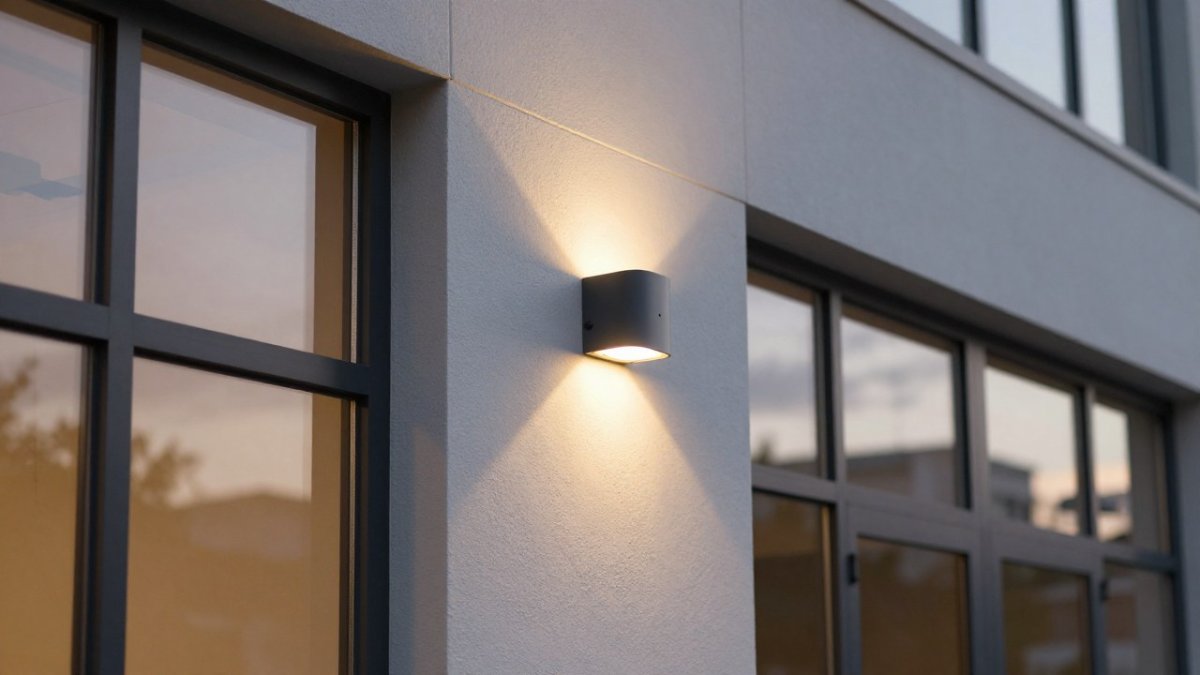
Exterior lighting should be bright, evenly distributed and triggered by motion, so it activates when someone approaches a vulnerable wall at night. Dark corners and shadowed alleys are the spots most often targeted. Confirm that lights cover the entire vulnerable surface, not just the nearest part of it.
Keep the equipment working. Cameras that are blocked by overgrown shrubs or lights that burn out are a false sense of security. Schedule a monthly check of camera views and light function, and include it in your facility maintenance routine.
Step 3: Choose the Right Anti-Graffiti Coating for Commercial Buildings
Anti-graffiti coatings fall into two broad families, and the right choice depends far more on the surface than on the brand. Sacrificial coatings, sometimes called barrier or temporary coatings, form a removable layer on top of the substrate. When graffiti appears, the coating is dissolved or peeled away along with the paint, and a fresh coat is applied.
The practical difference is in the maintenance cycle. Sacrificial coatings generally need reapplication after each removal, and may also need reapplication on a scheduled interval as weather and UV exposure wear them down. Permanent coatings generally last longer between applications but require the correct cleaning agent and method; using the wrong solvent can dull the finish or damage the coating.
Match the coating to the substrate before comparing price:
- Brick and concrete block: Porous masonry absorbs paint and is the hardest surface to clean once tagged. A penetrating, breathable coating that bonds into the pores usually performs better than a film-forming product, which can trap moisture and cause efflorescence or spalling. Confirm the product is vapor-permeable.
- Stucco and painted plaster: These surfaces can chalk or soften under strong solvents. A sacrificial coating that peels cleanly is often the safer choice, and any permanent coating should be tested for compatibility with the existing paint system.
- Painted metal, roll-up doors and utility boxes: Smooth, non-porous surfaces generally release graffiti well with a film-forming permanent coating. Check that the coating is compatible with the door's finish and won't interfere with moving parts or hardware.
- Smooth concrete and parking structures: A film-forming permanent coating is common here because it cleans easily and stands up to power washing. Verify slip resistance is not compromised on walking surfaces.
- Historic or decorative surfaces: Avoid aggressive coatings and removers. A conservator or specialty contractor should specify products, because irreversible damage to original materials can trigger preservation review.
Lifecycle cost is where cheap coatings lose. A low-cost sacrificial product that must be reapplied several times a year can cost more over a three-year horizon than a permanent coating applied once and maintained, once labor, access equipment and disposal are counted.
Surface preparation matters as much as the product. Coatings applied over dirt, efflorescence, mildew or failing paint will not bond, and the failure usually shows up as patchy peeling after the first cleaning. Clean and dry the surface thoroughly, repair cracks and spalls, and follow the manufacturer's guidance on temperature, humidity and cure time before the wall is exposed to weather or traffic.
Watch out: Some solvent-based removers can stain masonry, discolor certain paints, or damage adjacent sealants and window gaskets. Test any coating-and-remover combination on an inconspicuous area and let it cure fully before committing to a full wall.
The table below sets out how each surface type affects the choice of coating, drawn from the guidance in this section.
| Surface | Key consideration | Recommended approach |
|---|---|---|
| Brick and concrete block | Porous; absorbs paint | Penetrating, vapor-permeable coating |
| Stucco and painted plaster | Can chalk or soften under strong solvents | Sacrificial coating that peels cleanly |
| Painted metal and roll-up doors | Smooth, non-porous | Film-forming permanent coating |
| Smooth concrete and parking structures | Needs to stand up to power washing | Film-forming permanent coating |
| Historic or decorative surfaces | Irreversible damage risk | Specialist-specified products only |
Step 4: Protect Glass with Anti-Graffiti Film for Commercial Windows
Glass is a common target, and etching or scratching can make it expensive to replace. Anti-graffiti film is a clear, sacrificial layer applied to the glass surface. When graffiti is marked on the film, it can be peeled or replaced, leaving the original glass intact.
Film selection depends on the glass type and exposure. Ask whether the film is rated for exterior use, how much visibility it reduces, and how it performs under your local weather conditions. Confirm that the installer is familiar with commercial glazing, since poor application can leave bubbles or edges that peel within months.
Film is not a substitute for cleaning. Once the film is marked, replace or clean it promptly, because a graffitied film left in place signals that the building is unmonitored. Keep a spare roll or a service agreement so replacements can happen quickly.
Step 5: Set a Commercial Graffiti Removal and Escalation Protocol
Speed is an important deterrent you control, and speed works best with a written workflow. A tag removed promptly gives the tagger little reward; a mark left for weeks invites more.
1. Reporting channel. Designate one reporting method, a phone number, email address or work-order portal, and make sure tenants, cleaning crews, security and neighbors all know it. Post the channel on tenant notices and in service areas.
2. Triage and response times. Set target response windows by visibility and risk rather than a single blanket rule.
3. Documentation standard. Photograph every incident before cleaning, from a consistent distance and angle, and keep the images with the work order. Note the surface, the type of marking (spray paint, marker, etching, sticker), and the removal method used.
4. Safe removal. Match the method to the surface and the marking. Gentle, low-pressure rinsing with a neutral detergent is often enough for painted surfaces and coated walls.
**5.
6. Review cadence. Review the incident log monthly. Look for surfaces that appear more than once, response times that consistently miss the target, and removal methods that are damaging the substrate. Adjust the property map from Step 1 and shift budget toward the surfaces that generate the most incidents.
Tenants, employees and neighbors are part of the protocol, not an afterthought. A short note in tenant communications explaining how to report graffiti and why fast reporting matters closes the gap between an incident and a response.
Start Your Graffiti Prevention Plan with CBS Facility Maintenance
Preventing graffiti is about consistent habits: know your vulnerable surfaces, make tagging visible and difficult, choose coatings and films that fit each material, and respond fast every time. Readers can review the full range of building upkeep and graffiti response services offered. Most of these steps fold into routine facility maintenance, which is why many property managers prefer a single vendor for the work.
CBS Facility Maintenance is a family-owned provider of cleaning, repair and exterior upkeep across the Southwest, with a single point of contact for your facility needs and month-to-month service rather than long-term contracts. Our team can help you map your property, plan surface protection and keep removal response times short, so that a single tag doesn't turn into a recurring problem.
anti-graffiti coating guidance
Frequently Asked Questions
What are some effective strategies for preventing graffiti?
The most effective strategies combine several layers: good lighting that stays on at night, visible surveillance cameras, landscaping that removes hiding spots, and protective coatings or films on vulnerable surfaces. Prompt removal matters as much as prevention, because fresh graffiti that stays up invites more tagging. Commercial buildings that pair these measures with a fast cleanup routine typically see fewer repeat incidents than those that rely on a single fix.
Do anti-graffiti coatings work?
Coatings can work well when the right coating is matched to the surface. Sacrificial coatings let graffiti be washed off with low-pressure rinsing and a neutral detergent, while permanent coatings resist paint and make removal easier without damaging the substrate. Coatings must be applied to clean, dry, compatible surfaces such as masonry, concrete, or brick. Test a small area first, and reapply sacrificial coatings on the manufacturer's schedule so protection does not wear thin.
Can anti-graffiti film protect commercial windows?
Anti-graffiti film can protect commercial windows and other smooth glass surfaces. The film creates a sacrificial layer that lets paint or marker be removed, and the film itself can be replaced when it is damaged. Film is generally easier to install on storefronts and ground-level glass than on high or curved panes. Confirm with your installer that the film is suitable for your glass type and that it does not interfere with signage or visibility requirements.
What should a commercial property manager do after graffiti appears?
Document the graffiti with photographs and the time it was discovered, and consider reporting it to local authorities if the wording or imagery is threatening or the site is part of an ongoing pattern. Remove it as quickly as possible, ideally within 24 to 48 hours, using the cleaning method that suits the surface. Review nearby lighting, cameras, and access points, and update your response protocol so tenants, employees, and vendors know who to call.