 Ultimate guide
The Complete Guide to Facility Management for Healthcare Facilities
Last Updated: October 30, 2026
Quick Summary
Facility management for healthcare facilities is the coordinated operation of buildings, systems, staff, and compliance programs that keep patient care running safely. It covers daily cleaning, preventive maintenance on HVAC, electrical, and plumbing systems, regulatory compliance and accreditation readiness, space planning, asset tracking, and emergency preparedness. One team should own the whole picture rather than several vendors working in isolation.
- A healthcare facilities manager owns the building, the people who service it, documentation, and the budget.
- Preventive maintenance assigns every critical asset a service interval, a named owner, and a completion record.
- Infection prevention depends on consistency more than intensity, with written procedures, trained staff, and verification.
- Build one master compliance calendar listing every recurring test, inspection, and log by facility type.
- A generator that starts during a monthly test is not proof it will carry the load during an outage.
Table of Contents
- What Healthcare Facilities Management Covers
- Healthcare Facility Maintenance: Preventive Schedules and Asset Management
- Healthcare Facility Cleaning and Infection Prevention
- Regulatory Compliance and Accreditation Basics
- Healthcare Facilities Planning and Space Management
- Healthcare Facility Management Software and KPIs
- Emergency Preparedness and Business Continuity
- Choosing a Facility Maintenance Partner for Your Healthcare Site
- Frequently Asked Questions
What Healthcare Facilities Management Covers
Facility management for healthcare facilities is the coordinated operation of buildings, systems, staff, and compliance programs that keep patient care running safely. The buildings that run smoothly tend to be the ones where one team owns the whole picture, not several vendors working in isolation.
The scope is broader than most people expect:
- Daily cleaning and environmental hygiene
- Preventive maintenance on HVAC, electrical, and plumbing systems
- Regulatory compliance and accreditation readiness
Core Responsibilities of a Facilities Manager
A healthcare facilities manager owns four things: the building, the people who service it, the documentation that proves work happened, and the budget that pays for it all. That means scheduling preventive maintenance, dispatching work orders, coordinating staff and vendors, tracking assets, and keeping records inspectors can review on demand.
How Healthcare Facilities Differ From Commercial Buildings
Commercial buildings tolerate downtime. Healthcare environments do not. A failed air handler in an office is an inconvenience; in a clinic, it can shut down a procedure room. Infection prevention requirements, patient safety standards, and accreditation surveys add layers that ordinary commercial facility operations never face. Staff coordination is also tighter, because cleaning and maintenance work has to fit around patient schedules rather than the other way around.
Healthcare Facility Maintenance: Preventive Schedules and Asset Management
Preventive maintenance is the backbone of healthcare facility maintenance. A workable schedule assigns every critical asset a service interval, a named owner, and a documented completion record. Asset management ties directly into this: you cannot schedule maintenance on equipment you have not inventoried. Maintaining a comprehensive registry of these components provides the necessary foundation for executing rigorous critical infrastructure maintenance to ensure uninterrupted patient care.
A practical starting cadence looks like this:
| Asset | Service Interval | Owner |
|---|---|---|
| HVAC filters | Monthly to quarterly | Mechanical vendor |
| Emergency lighting | Monthly test | Facilities staff |
| Generators | Monthly load test | Electrical contractor |
| Fire extinguishers | Annual inspection | Compliance lead |
| Medical gas systems | Per manufacturer spec | Certified vendor |
Building Systems That Need the Most Attention
HVAC systems top the list. Ventilation and indoor air quality affect both infection control and equipment reliability, so filter changes and coil cleaning cannot slip. Electrical distribution and emergency power come next, since life safety systems depend on them. Plumbing deserves attention too, particularly in clinical areas where water intrusion can force immediate closure. Letting the maintenance backlog grow quietly is a common failure.
Healthcare Facility Cleaning and Infection Prevention
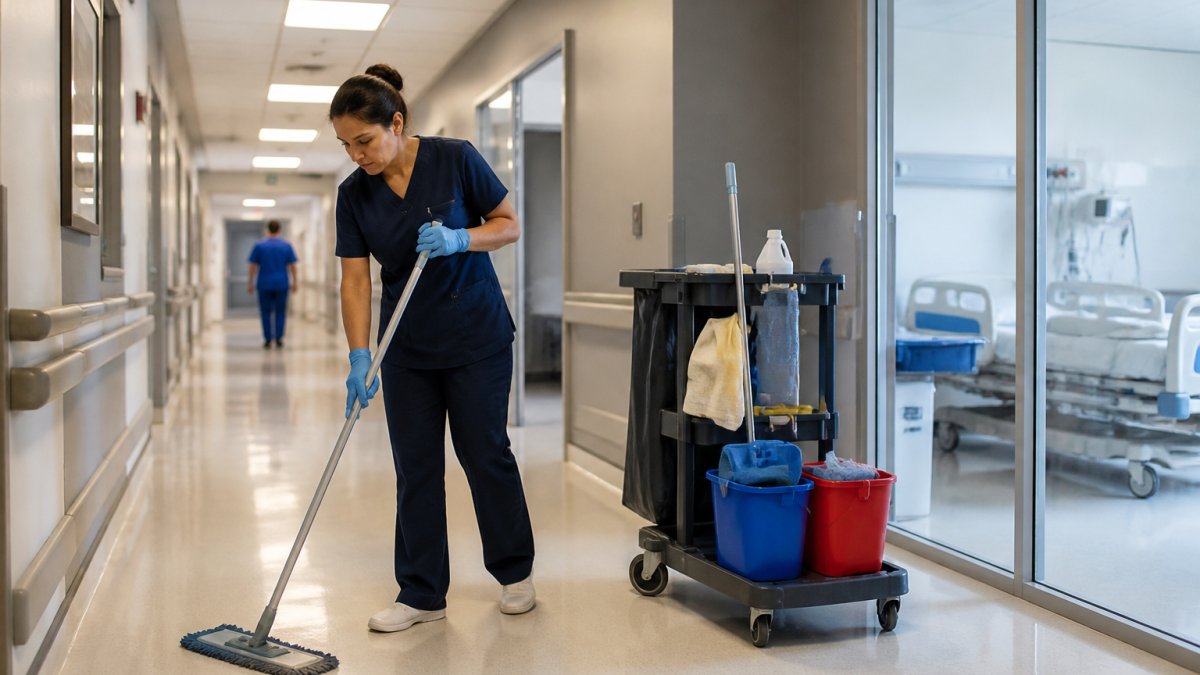
Healthcare facility cleaning is a clinical risk control, not a cosmetic service. High-touch surfaces, treatment rooms, and waiting areas need documented protocols that separate routine cleaning from disinfection.

Infection prevention depends on consistency more than intensity. If you are evaluating providers, explore the disinfection and sanitization services available for healthcare spaces, and review commercial janitorial services to see how a full-scope cleaning program is structured.
Regulatory Compliance and Accreditation Basics
Compliance in healthcare facilities management is not a single checklist, it is a layered system of federal conditions, state licensing rules, local codes, and accrediting-body standards that vary by facility type. Regulators and accreditors do not inspect intentions; they inspect records. Maintenance logs, cleaning schedules, training certificates, incident reports, and utility system records all need to be current, legible, and retrievable on demand.
How Requirements Differ by Facility Type
The scope of required documentation and the intensity of survey activity scale with the acuity of care delivered. A useful way to frame the differences:
- Hospitals and inpatient care: Full life safety documentation, including fire alarm and sprinkler testing, emergency power load tests, and utility system logs for medical gas, vacuum, and electrical distribution. Infection control records must connect to construction and renovation activity, and environment-of-care rounds are typically ongoing rather than annual. Accrediting surveys are comprehensive and often unannounced in part.
- Ambulatory surgery centers and outpatient procedural facilities: Equipment maintenance records, sterilization logs where applicable, HVAC and ventilation verification for procedure rooms, and cleaning verification for high-touch and semi-critical surfaces. Life safety documentation is still required but the physical footprint is smaller, so the risk concentrates in a few critical systems.
- Physician offices and clinics: Surface disinfection schedules, staff training files, safety inspections, and equipment maintenance records for diagnostic devices. Many clinics are surveyed less frequently, which makes self-audit discipline more important, not less.
A Usable Audit Checklist
A practical self-audit should be repeatable and short enough that staff actually complete it. A workable monthly checklist covers:
- Are all preventive maintenance work orders for critical systems closed with a date, technician name, and result?
- Are fire alarm, sprinkler, and emergency lighting tests logged and within their required intervals?
- Are generator load tests and fuel records current, with any exceptions documented and resolved?
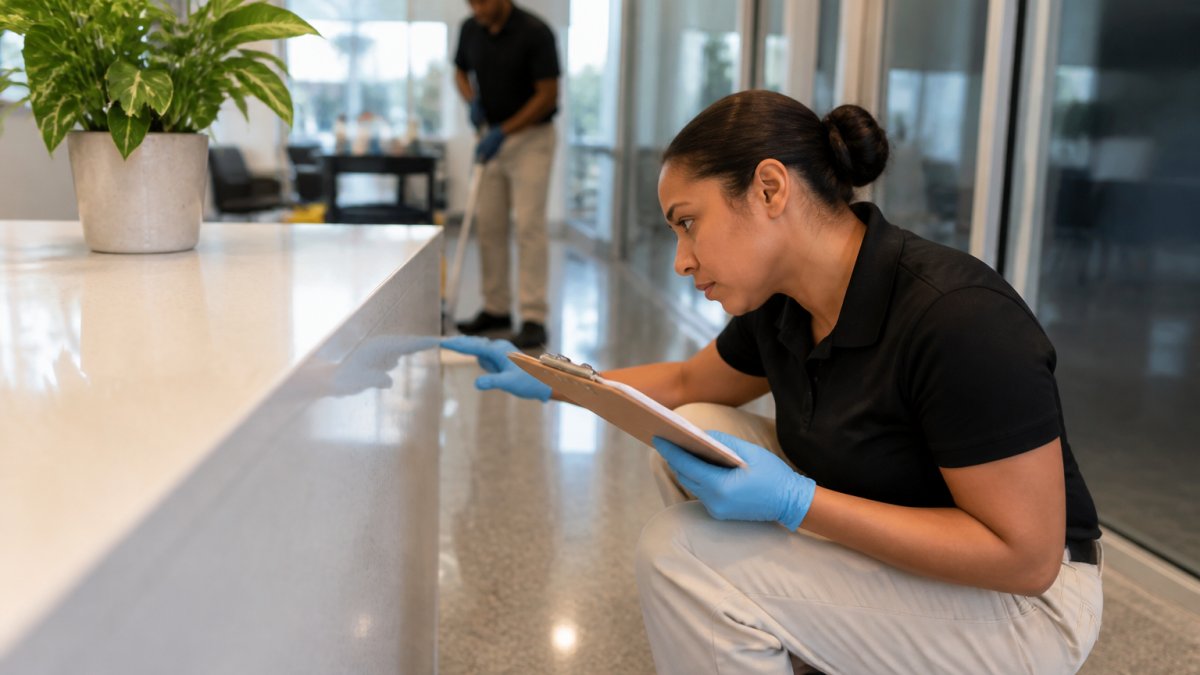
The best approach is to build compliance into daily operations rather than preparing for surveys in a panic. When records are generated as work happens, through work order systems, checklists, and asset logs, accreditation reviews become a review rather than a scramble. The organizations that struggle most are usually not the ones with the oldest buildings; they are the ones where documentation lives in binders, spreadsheets, and memory instead of a single retrievable system.
Healthcare Facilities Planning and Space Management
Healthcare facilities planning is the discipline of matching physical space to clinical demand. Space use reviews reveal rooms sitting empty while other areas are overcrowded. Facility planning also covers facility design input, healthcare real estate decisions, and long-range capital planning.
A simple annual review of room usage, storage allocation, and patient flow often surfaces changes that cost little and relieve real pressure.
Healthcare Facility Management Software and KPIs
Healthcare facility management software earns its place when it tracks work orders, assets, and preventive maintenance in one system. The value is not the dashboard; it is the audit trail. Software that logs who did what and when turns compliance from a memory exercise into a report.
Track these metrics to judge operational performance:
- Preventive maintenance completion rate: the share of scheduled work finished on time
- Response time: how quickly urgent requests are acknowledged
- Downtime: hours critical systems are unavailable
Analytics only help if the underlying data is clean. Start with accurate asset records and consistent work order categories before investing in reporting tools.
Emergency Preparedness and Business Continuity
Emergency preparedness for a healthcare facility means planning for the specific failures that stop patient care: loss of power, loss of water, HVAC failure, medical gas interruption, severe weather, and security incidents. Business continuity planning goes a step further, it defines how clinical operations continue when a building system fails, and it assigns the authority to make that call. Most plans fail not because the hazard list is incomplete but because the plan was never tested under realistic conditions.
The Failure Modes That Matter Most
A healthcare-specific plan prioritizes the utilities and systems that clinical staff cannot work without:
- Electrical power: Backup generators, automatic transfer switches, and uninterruptible power supplies for critical loads. Plans should specify which circuits are on emergency power, how long fuel lasts, and what happens if the generator fails to start. Monthly load tests and fuel quality checks are the difference between a plan and a hope.
- Water and plumbing: Loss of domestic water shuts down sterilization, hand hygiene, and restrooms. Water intrusion from above or below can force immediate closure of clinical space. Plans should identify alternate water sources, shutoff locations, and the threshold for suspending procedures.
- HVAC and ventilation: Loss of ventilation in procedure rooms, isolation rooms, and pharmacies can require immediate curtailment of services. Plans should define which spaces must maintain pressure relationships and what temporary measures are acceptable.
Building a Continuity Plan That Gets Used
Service continuity depends on four elements that most plans skip or leave vague:
- Named contacts for every critical vendor, reachable after hours. A plan that lists a company name but not a cell number is not a plan. Include escalation paths for mechanical, electrical, plumbing, medical gas, elevator, and environmental services vendors.
- Pre-approved response procedures. Nobody should be debating authority during an incident. Define who can authorize evacuation, shutdown of a clinical area, emergency procurement, and facility closure, and name backups for each role.
- A recovery priority list. Tell staff which systems to restore first. In most healthcare settings, the sequence runs from life safety and critical care utilities outward to comfort and administrative systems. The list should be clinical input, not a facilities guess.
- A communication tree. Staff, patients, families, regulators, and vendors all need different information on different timelines. Define who communicates what, and through which channel.
Testing and Exercising the Plan
A plan that lives in a binder and never gets tested fails when it matters. Practical exercising includes tabletop drills that walk through a specific scenario, such as a generator failure during a procedure day, and functional exercises that actually test backup systems, communications, and vendor response. After every exercise, document what failed and assign a corrective action with an owner and a due date.
Choosing a Facility Maintenance Partner for Your Healthcare Site
The right partner handles cleaning, repairs, and building maintenance through one point of contact, so accountability never gets lost between vendors. When you evaluate providers, ask about response times, after-hours coverage, documentation practices, and whether contracts lock you in.
A short evaluation checklist:
- Can one contact coordinate cleaning, maintenance, and repairs?
- Are service terms flexible or long-term?
- Is work documented in a way inspectors can review?
CBS Facility Maintenance is a family-owned and operated provider with over 20 years of industry experience, serving commercial sites across the Southwest and carrying licensing, bonding, and insurance. For a deeper comparison of staffing models, read outsourcing facility maintenance versus in-house, and when you are ready to act, contact our team to discuss your site. Commercial building maintenance services cover the repair and upkeep side of the plan.
Frequently Asked Questions
What does healthcare facilities management include?
Healthcare facilities management covers the day-to-day operations that keep a medical building safe and functional: building maintenance and asset management, HVAC and ventilation upkeep, cleaning and infection prevention, regulatory compliance, security, and emergency preparedness. It also includes planning work such as space management, capital planning, and coordinating outside vendors. A facilities manager oversees all of these areas, often through a mix of in-house staff and contracted service providers, so clinical teams can focus on patients.
Why is facility management important in healthcare?
Healthcare environments carry risks that ordinary office buildings do not. Poor ventilation, missed maintenance, or inconsistent cleaning can affect patient safety and infection prevention, and compliance failures can put accreditation at risk. Facility management keeps HVAC systems, medical equipment, and environmental hygiene in check so service continuity holds up. It also protects the bottom line: preventive maintenance reduces downtime and emergency repair costs, while clear KPIs like response time and preventive maintenance completion show whether the building is actually performing.
How can healthcare facilities improve maintenance and reduce downtime?
Start with a preventive maintenance schedule tied to each asset, from HVAC systems to backup generators, and track completion rates rather than just scheduling work. Route every request through a work order system so nothing gets lost between shifts. Prioritize repairs by clinical impact: a failing air handler in an operating suite outranks a cosmetic issue in a lobby. Review response time and maintenance backlog monthly, and keep critical spares on hand. Many facilities also consolidate vendors to reduce coordination delays when something breaks.
What are best practices for healthcare facility cleaning and infection prevention?
Focus cleaning on high-touch surfaces such as door handles, bed rails, elevator buttons, and waiting room chairs, and match the cleaning method to the space: patient rooms and procedure areas need more frequent, thorough attention than administrative offices. Use color-coded tools to prevent cross-contamination between zones, and document what was cleaned and when. Staff training matters as much as supplies, so make sure cleaning crews understand the difference between cleaning, sanitizing, and disinfecting. A written schedule with sign-offs makes it easier to catch gaps before they become problems.
How should hospitals prioritize facility maintenance projects?
Rank projects by clinical risk first: anything affecting patient safety, infection control, or life safety systems comes before cosmetic or convenience work. Next, weigh regulatory and accreditation exposure, since unresolved deficiencies can carry serious consequences. Then factor in equipment reliability and downtime costs. A simple approach is a three-tier list: critical (fix now), important (schedule within the quarter), and deferred (plan into capital budgeting). Reviewing the list with clinical leadership each quarter keeps priorities aligned with actual patient care needs.
What software do healthcare facilities use to manage maintenance and space?
Most healthcare facility management software combines a computerized maintenance management system (CMMS) with space management and reporting tools. A CMMS handles work orders, preventive maintenance schedules, and asset histories, while space management modules track room utilization and help with healthcare facilities planning. Look for software that supports compliance documentation, mobile access for technicians, and dashboards for KPIs like response time and maintenance backlog. Smaller clinics often do well with lighter tools, while hospitals typically need systems that integrate with security and building automation.
Healthcare buildings punish deferred work faster than any other property type. If your current setup involves multiple vendors and unclear accountability, consolidate it. Get started with CBS Facility Maintenance and put cleaning, maintenance, and repairs under one point of contact with month-to-month terms.