 blog
Professional Post Construction Cleanup Services
Table of Contents
- What Professional Post Construction Cleanup Services Actually Include
- Rough vs Final Construction Cleaning: Understanding the Phases
- Your Post Construction Cleaning Checklist for Every Project Phase
- Health and Air Quality: Why Fine Dust Removal Matters
- Post Construction Cleaning Cost Per Square Foot: What Drives the Price
- How to Choose Professional Post Construction Cleanup Services
- Frequently Asked Questions
Last Updated: September 18, 2026
What Professional Post Construction Cleanup Services Actually Include
Professional post construction cleanup services cover every task that turns a finished job site into a space people can actually occupy: debris hauling, fine dust removal, surface sanitization, and a final detail pass before handover. At CBS Facility Maintenance, we've handled these projects across the Southwest for more than 20 years, and the work is far more involved than a standard janitorial visit.
Post construction cleanup is the multi-phase process of removing construction debris, dust, residue, and surface contaminants from a newly built or renovated space so it is safe, presentable, and ready for occupancy.
A typical scope includes:
- Removal of construction debris, packaging, and leftover materials
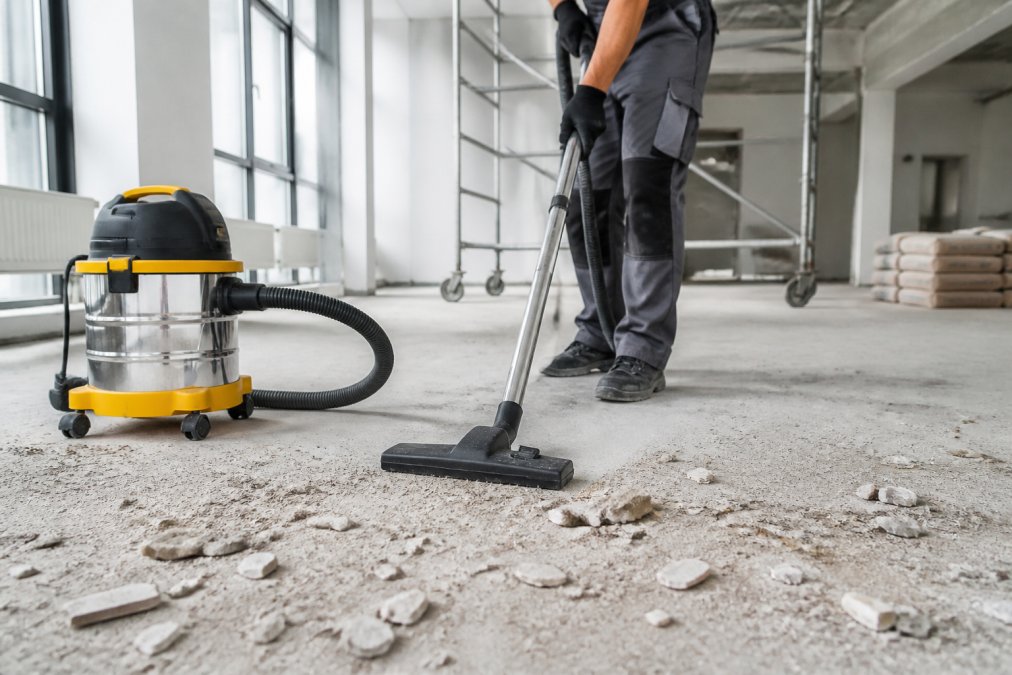
- Industrial vacuuming of floors, corners, and ledges with HEPA filtration
- Fine dust removal from every horizontal and vertical surface
- Window, frame, and window track cleaning
- Floor scrubbing, mopping, and polishing by surface type
- HVAC vent cleaning and fixture wipe-down
- Surface sanitization of kitchens, restrooms, and high-touch areas
- A final walkthrough with the client before sign-off
What most people miss is that this isn't one job. It's a sequence, and skipping a step means dust you removed on Monday is back on Tuesday.
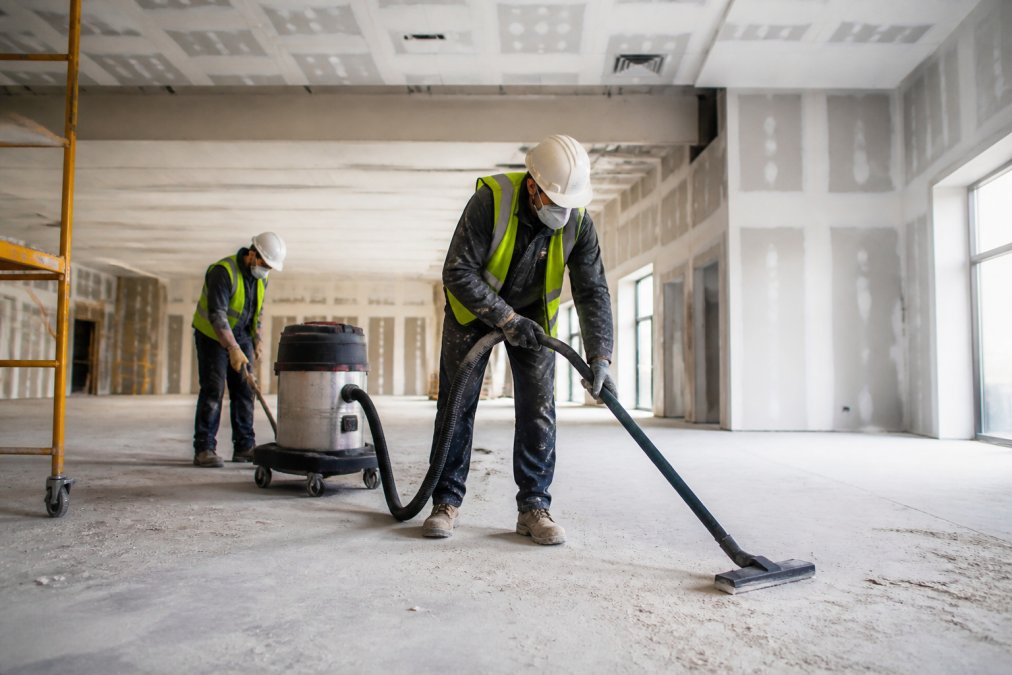
Rough vs Final Construction Cleaning: Understanding the Phases
Rough construction cleaning happens mid-project, while trades are still working, and it targets debris and bulk dust so the site stays safe and workable.
Some projects also need a touch-up cleaning a day or two after the final clean, once dust that was airborne during the walkthrough has settled. Build that into the schedule rather than treating it as a surprise.
Your Post Construction Cleaning Checklist for Every Project Phase
A post construction cleaning checklist should be organized by phase, not by room, because each phase has a different goal. Here's the framework we use.
Rough clean checklist:
- Remove all construction debris and packaging
- Sweep and haul scrap from every room
- Clear walkways and exits for site safety
- Vacuum bulk drywall dust from floors
- Wipe down framing and exposed surfaces
Final clean checklist:
- HEPA vacuum all floors, corners, and ledges
- Remove fine dust from walls, ceilings, and fixtures
- Clean window glass, frames, and window tracks
- Scrub and polish floors by material type
- Clean and sanitize restrooms and kitchens
- Wipe HVAC vents and returns
- Remove construction residue from hard surfaces
- Complete a final walkthrough with the client
Touch-up checklist:
- Re-dust surfaces that settled after the final clean
- Spot-clean glass and fixtures
- Confirm move-in ready condition
Health and Air Quality: Why Fine Dust Removal Matters
Three things drive better indoor air after a project:
- HEPA filtration captures fine particles that standard vacuums push back into the air
- HVAC vent cleaning removes dust from the system before it spreads through the building
- Repeat passes on surfaces catch what settles after the first cleaning
For facilities serving healthcare, retail, or hospitality clients, this matters even more. Occupants notice dust within minutes of walking in, and it shows up in reviews and complaints.
Post Construction Cleaning Cost Per Square Foot: What Drives the Price
Post construction cleaning cost per square foot varies widely because the price reflects scope, condition, and access, not just floor area. Two buildings of the same size can price very differently based on how much debris is left behind and how detailed the finish work needs to be. Understanding the mechanism behind each cost driver is what lets you compare bids apples to apples instead of guessing why one quote is double another.
Here is how each driver actually moves the number:
- Project size and layout - Larger spaces spread fixed mobilization costs (crew travel, equipment staging, dumpster placement) across more square footage, so the per-square-foot rate drops. Complex layouts reverse that: every extra room, hallway, and closet adds a separate dust zone, and labor scales with the number of surfaces, not the total area.
- Debris volume - Rough cleaning is priced by the load. Heavy construction debris and packaging mean more hauling trips and higher waste management fees, which are often billed as a pass-through cost on top of labor.
- Dust severity - Drywall dust and residue removal take more passes and more time. A space that saw heavy sanding can require three or four wipe-down cycles on the same surface before it stops leaving a white streak on a gloved hand.
- Surface types - Natural stone, glass, and specialty finishes need specific products and slower technique. Abrasive pads that are fine on concrete will etch polished stone, so the crew has to switch methods room by room.
- Access and height - Multi-story work, lifts, and tight spaces add labor hours. Anything above a standard reach requires lift rental or scaffolding time, and that time is billed whether or not the crew is actively cleaning.
- Phase scope - Rough clean, final clean, and touch-up are priced separately because they use different crews, equipment, and time windows. Bundling all three into one contract usually lowers the total versus booking them as separate jobs.
- Timeline - Rush turnarounds and after-hours work carry a premium. Night and weekend shifts mean overtime wages, and compressed schedules mean more crew members on site at once, which raises the labor rate even if total hours stay flat.
How to Choose Professional Post Construction Cleanup Services
Insurance and liability: the gap most buyers miss
- General liability insurance, covers property damage if the crew scratches a finished floor, cracks a window, or damages a fixture during cleaning. Ask for the certificate of insurance (COI) and confirm the coverage limits are appropriate for the project value, not just the minimum your state requires.
- Workers' compensation insurance, covers the crew if someone is injured on your site. If a cleaner is hurt on your property and the vendor does not carry workers' comp, the claim can fall back on you as the property owner or general contractor.
- Surety bond, a bond is not insurance. It is a guarantee that the vendor will perform the contracted work or you can file a claim against the bond. Bonding matters most on large projects where a walkthrough failure could delay occupancy.
Equipment and method questions
- What filtration do you use? Look for HEPA filtration and industrial vacuuming, not standard shop vacuums. A shop vac pushes fine drywall dust back into the air and into the HVAC system.
- How do you handle debris disposal? Confirm waste management and disposal are included in the quote, and ask where debris goes. Responsible disposal means separating recyclable materials, metal, cardboard, clean wood, from landfill waste, which is increasingly a requirement on commercial projects pursuing green building certification.
- Do you use green cleaning products? For occupied buildings, low-VOC and eco-friendly products reduce the chemical load on top of the construction dust you are already removing.
Schedule and communication questions
- Can you work around our schedule? Phased cleaning should fit your project completion date, not the other way around. Ask how they handle a slipped trade schedule, because it happens on nearly every job.
- Who is my point of contact? One contact beats a call center every time. On a multi-phase project, that person is coordinating rough, final, and touch-up around other trades.
- Do you offer month-to-month service? Contracts that lock you in for years rarely serve the client, especially when the scope is a one-time handover clean.
OSHA guidance on silica dust and construction site hazards is worth reviewing if your project involved drywall, concrete, or masonry work, since those materials produce the fine dust that makes professional cleanup essential.
Frequently Asked Questions
How much does post construction clean up cost?
Post construction cleaning cost per square foot depends on project size, debris volume, number of phases needed, and site conditions. Pricing varies based on whether you need rough clean, final clean, or both. Professional post construction cleanup services typically quote after a walkthrough to assess dust levels, residue removal needs, and surface sanitization requirements. Request a free quote for an accurate estimate based on your specific facility.
What is included in a standard post construction cleaning service?
Standard professional post construction cleanup services cover fine dust removal from all surfaces, construction debris disposal, window track cleaning, HVAC vent cleaning, floor scrubbing, and surface sanitization. Most providers handle drywall dust, paint overspray residue, and adhesive removal. A complete post construction cleaning checklist includes rough clean for debris removal and final clean for move-in ready conditions. Some providers also offer touch-up cleaning after final walkthrough.
Why is professional cleaning necessary after construction?
Construction leaves fine dust and residue that regular janitorial crews cannot address. Drywall dust contains silica particles that damage HVAC systems and affect air quality. Construction site hazards like exposed nails and debris require professional equipment including HEPA filtration vacuums. Insurance and liability requirements often mandate documented cleaning before occupancy. Professional post construction cleanup services ensure your facility meets safety compliance standards and is truly move-in ready.
How long does professional post construction cleanup take?
Timeline depends on square footage, project scope, and how many phases are needed. A small office might require one to two days for final clean, while a commercial facility preparation project could take a week or more. Rough clean happens during construction, final clean after all trades finish, and touch-up cleaning occurs after final walkthrough. Scheduling professional post construction cleanup services early prevents delays to your move-in date.