 Comparison
Is Professional Parking Lot Sweeping Worth It?
Last Updated: November 19, 2026
Quick Summary
Professional parking lot sweeping is usually worth it when its annual cost is smaller than the pavement repairs, drain cleaning, and liability exposure it helps prevent. Its value depends on lot size, debris load, and whether the service covers curbs, edges, and drains, so compare what each quote includes.
- Tight corners and gutters hold debris that breaks down into fine material holding water against pavement.
- Compare a full year of sweep fees against documented repair, drain, and claim costs, not a single visit.
- Frequency varies: retail often needs weekly service, while office lots typically need every two to four weeks.
- Cheap quotes that skip curbs and drains can cost more over a year as debris keeps feeding repairs.
- Track trip complaints, debris after each visit, and pavement repair requests before and after starting service.
Table of Contents
- What Professional Parking Lot Sweeping Actually Covers
- Parking Lot Sweeping Cost: What You Pay and What You Save
- Parking Lot Sweeping Frequency for Different Property Types
- Professional vs. In-House Parking Lot Sweeping
- Building a Parking Lot Sweeping Maintenance Plan
- How to Measure Whether the Service Is Paying Off
- Scheduling Your First Sweep With CBS Facility Maintenance
- Frequently Asked Questions
What Professional Parking Lot Sweeping Actually Covers
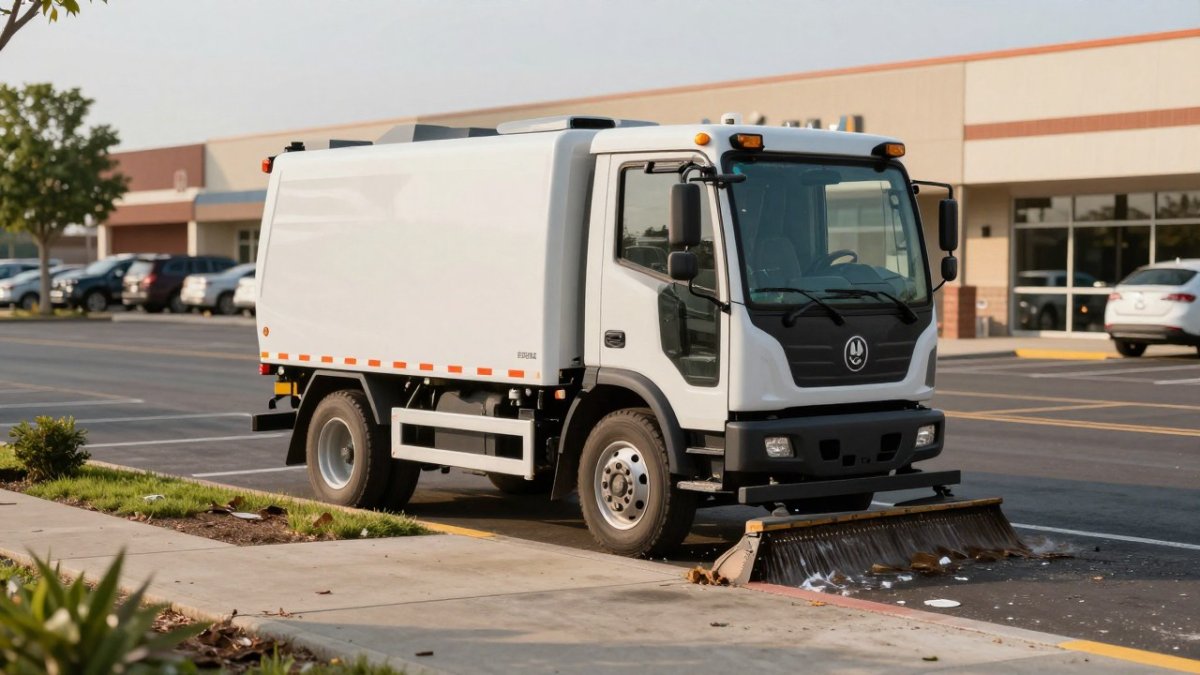
Professional parking lot sweeping is a scheduled service in which a contractor uses a power sweeper to remove dirt, litter, sand, and fine sediment from pavement, curbs, and edges. It is best treated as part of a broader pavement care plan, not a cosmetic chore.
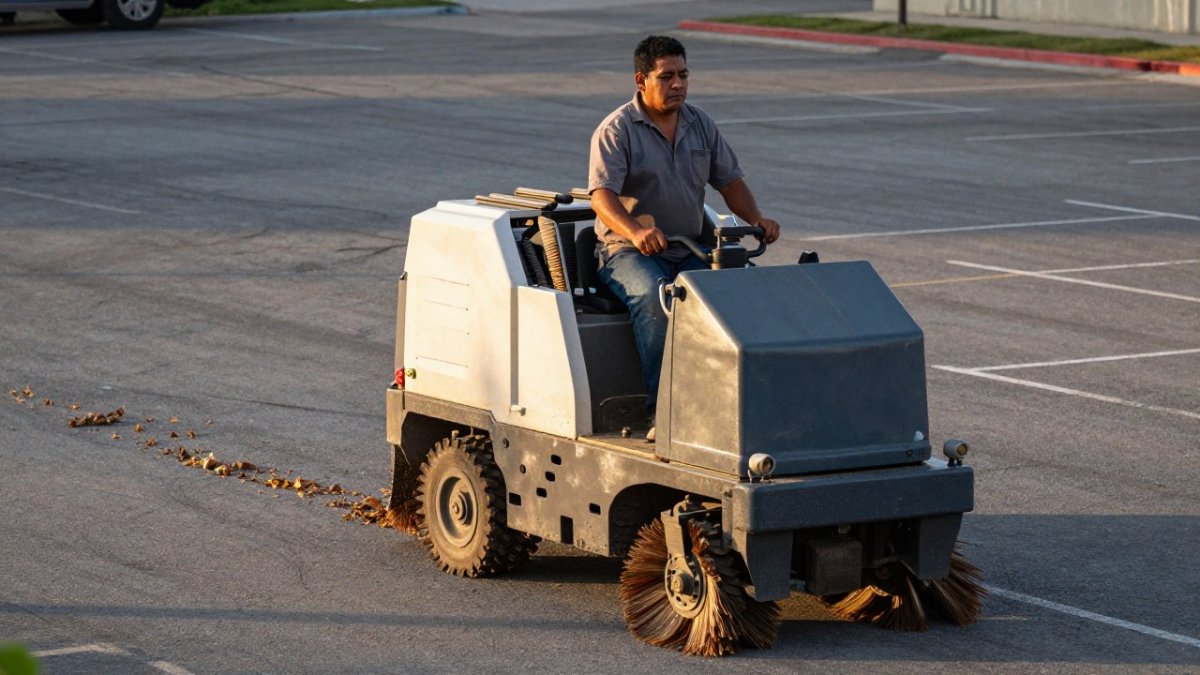
Most commercial sweeps cover the drive aisles, parking stalls, loading zones, and the curb lines where debris collects. Thorough sweeps also clear storm drain inlets and the tight corners that a rider sweeper misses. That detail matters, because debris left in corners and gutters breaks down into the fine material that holds water against the pavement.
- Drive aisles and parking stalls
- Curbs, edges, and islands
- Loading areas and entrances
- Storm drain inlets and gutters
- Tight corners and dead zones
Power sweeping also controls the litter and sediment that wash toward drains after rain. The Environmental Protection Agency describes stormwater runoff as a leading source of pollution in U.S. waterways (EPA guidance on stormwater runoff pollution), which is one reason many property managers now treat sweeping as a compliance-minded task rather than a simple appearance upgrade.
Parking Lot Sweeping Cost: What You Pay and What You Save
Professional sweeping costs vary with lot size, sweeping method, and frequency. Pricing depends on the square footage, the number of parking spaces, and how often the lot needs service, so there is no single rate that fits every property. For current pricing on your site, visit the CBS Facility Maintenance website or request a quote.
A useful way to judge the cost is to compare it against what debris and pavement damage cost when left alone. Cleaning costs are predictable. Repair costs for cracked, raveled, or flooded pavement are not. The sections below show how contractors build a price and how to run a payback comparison on your own lot.
How Contractors Price a Sweep
Larger lots and heavier debris loads raise the price, and the sweeping frequency changes the per-visit rate.
When you compare quotes, confirm what each one includes. A low quote may cover the main aisles but skip the curbs and corners. Ask each provider exactly which areas are included before you compare totals. Also ask whether the quote covers storm drain inlets, loading zones, and the tight edges where a rider sweeper cannot reach, because those areas drive much of the real debris load.
Calculating the Payback on Pavement and Liability
The payback question has two parts: pavement life and liability exposure. Debris that stays on the surface accelerates wear, and standing sediment feeds cracks and potholes. Trip hazards from loose gravel and litter also create claims risk that a sweep reduces.
The Occupational Safety and Health Administration regulates walking-working surfaces for employers, and slip-and-fall exposure is a standard concern for commercial sites (OSHA walking-working surfaces standard). Building a simple comparison of annual sweep cost against one avoided repair or claim gives a clearer answer than comparing the sweep price alone.
A practical way to frame the math is to list the costs sweeping is meant to prevent and assign each a rough annual figure from your own records:
- Pavement repair: Crack sealing, patching, and sealcoating are recurring line items. Debris left in gutters and joints holds moisture against the surface and shortens the interval between repairs. Compare your last two or three years of repair invoices against the proposed annual sweep cost.
- Storm drain cleaning and flooding: Sediment that reaches inlets can clog drains and cause ponding, which damages pavement and creates slip hazards. Drain cleaning and any emergency response are avoidable costs that regular sweeping reduces.
- Liability exposure: One slip-and-fall claim can exceed years of sweeping fees. Documenting a scheduled sweeping program also supports a reasonable-care defense, which is why service reports matter.
- Staff time: If employees currently sweep by hand, multiply their hourly rate by the hours spent and compare that figure with the contract price.
The comparison is clearest when it covers a full year rather than a single visit, because sweeping costs are steady while repair and liability costs arrive in spikes.
Watch out: a quote that looks cheap per visit can cost more over a year if it skips curbs and drains, because debris left on site can keep feeding the repair cycle.
Parking Lot Sweeping Frequency for Different Property Types
Frequency depends on traffic volume, surrounding trees, and the type of property. A retail center with heavy turnover needs far more attention than a low-traffic office lot.
- Retail and shopping centers: Often weekly, with extra service after heavy seasons
- Office buildings: Typically every two to four weeks, adjusted for landscaping debris
- Warehouses and industrial sites: Often monthly, with more frequent service near loading docks
- Apartment and HOA communities: Commonly every two to four weeks
Seasonal factors shift these numbers. Leaf fall, spring pollen, and winter sand from snow treatment all justify a temporary increase in frequency. Match the schedule to what the lot actually collects, not to a calendar default.
Professional vs. In-House Parking Lot Sweeping
Many facilities managers ask whether their own staff can sweep the lot. The answer depends on equipment, labor hours, and consistency. A side-by-side comparison of what each option actually requires is more useful than a general recommendation.
| Factor | In-house staff | Professional service |
|---|---|---|
| Equipment | Often push brooms or rented units | Power sweepers suited to commercial lots |
| Equipment cost | Purchase or rental, plus storage and upkeep | Included in the contract rate |
| Labor | Existing staff pulled from other duties | Dedicated crew on a set schedule |
| Training and safety | Falls on the property | Provider's responsibility |
| Coverage | Frequently limited to main aisles | Usually includes curbs, edges, and corners |
| Consistency | Depends on staff availability | Scheduled and documented |
| Hidden cost | Staff time, equipment wear, turnover | Contracted rate per visit |
The Ownership Math
Buying or renting a commercial sweeper carries costs that are easy to overlook. Beyond the unit itself, there is storage space, fuel or charging, routine maintenance, replacement brushes, and repairs. A machine that sits idle between sweeps still needs upkeep, and a breakdown during leaf season leaves the lot unserved. Renting shifts some of that burden but adds a recurring fee and still requires a trained operator.
Labor is the larger variable. Sweeping a mid-size lot by hand with push brooms takes hours that come out of other maintenance duties. Those hours have a real cost even when they do not appear as a separate invoice, and they tend to disappear first when staff are short. A common pattern is for in-house sweeping to start strong and then lapse as other priorities crowd it out.
When In-House Makes Sense
In-house sweeping can work for very small lots with light debris, where a few minutes with a broom genuinely covers the area and no specialized equipment is needed. It can also make sense as a stopgap between scheduled visits for spills or isolated messes.
For larger properties, the labor hours and equipment wear often exceed the cost of a contracted service. The comparison is not just the contract price against a broom; it is the contract price against equipment ownership, staff time, training, and the risk that sweeping quietly stops happening. Running the numbers for your own site is a sound way to decide rather than assuming either option is cheaper.
Watch out: if in-house sweeping depends on staff who also handle emergencies, the schedule will slip exactly when debris is heaviest, so build a backup plan before relying on it.
Building a Parking Lot Sweeping Maintenance Plan
A maintenance plan turns sweeping from a reactive chore into a scheduled line item. Start by mapping the lot into zones, noting high-debris areas like entrances, dumpster pads, and landscaped islands.
Next, set a frequency for each zone and assign responsibility, whether to an internal team or a contractor. Record the dates of each sweep and any problem areas you find. That record becomes the evidence you need when you review the contract or justify the budget.
Your plan should also cover the surrounding grounds. Sweeping works best when it is paired with commercial landscape maintenance that keeps leaves and clippings off the pavement. CBS Facility Maintenance offers landscape maintenance across the Southwest, so the two services can share one schedule.
How to Measure Whether the Service Is Paying Off
Measure the service with a few simple indicators. Track the number of trip complaints, the volume of debris you see after each visit, and the number of pavement repair requests over a year. Compare those numbers before and after you start the service.
Also review the service report from the provider. A useful service report shows which areas were swept, when, and what was found. If the lot looks the same after each visit, the frequency or method may need adjusting.
Look at pavement condition during routine walk-throughs as well. Fewer cracks at the edges and less standing sediment suggest the sweeping is protecting the surface. Pair these observations with your cost records to see whether the service is delivering value.
Scheduling Your First Sweep With CBS Facility Maintenance
A first sweep works best when you share a site map, the areas of concern, and your preferred schedule. CBS Facility Maintenance works on a month-to-month basis, so you can test the service without a long-term commitment. For a single point of contact across cleaning, landscaping, and repairs, contact CBS Facility Maintenance to request a sweep or ask a question before you book. You can also review the full range of services on CBS Facility Maintenance's services overview.
If you are still deciding how to divide the work between vendors and staff, our guide to outsourcing facility maintenance versus keeping it in-house breaks down the tradeoffs in more detail. Once you have a quote, compare what each provider includes, and ask how they handle problem areas and rescheduling.
Ready to see what a consistent sweeping schedule does for your property? Get a free quote from CBS Facility Maintenance and start with a single visit.
Frequently Asked Questions
Is professional parking lot sweeping worth the cost?
For most commercial properties with regular traffic, yes, though the answer depends on lot size, traffic volume, and how much debris accumulates. Professional sweeping removes dirt, litter, and sediment that cause curb appeal problems, slip-and-fall hazards, and pavement wear. Contractors typically price by square footage or parking-space count, so compare quotes on the same basis. Ask whether the quote covers curbs, edges, and loading areas, since partial sweeps leave the most visible debris behind. Measure the result over a few months by tracking repair calls, cleanliness complaints, and pavement condition.
How often should a commercial parking lot be swept?
Sweeping frequency depends on how heavily the lot is used and what it collects. High-traffic retail centers often benefit from weekly sweeping, while offices and medical facilities with lighter use may need sweeping monthly or quarterly. Seasonal leaves, construction nearby, and windy conditions can justify extra visits. A parking lot sweeping maintenance plan should set a baseline frequency and allow adjustments after the first few months of service.
How much does professional parking lot sweeping cost?
Pricing depends on lot size, sweeping frequency, and whether the contractor charges per sweep or on a recurring contract. Some published guides cite per-square-foot ranges, but these are general references rather than quotes for a specific property. Pricing depends on quantity, frequency, and site conditions. For current pricing for your property, request a free quote from CBS Facility Maintenance on our website.
What are the benefits of hiring a parking lot sweeping company?
A professional sweeping company typically brings commercial equipment suited to removing fine sediment and debris. Regular service reduces slip-and-fall hazards, supports curb appeal for tenants and customers, and can slow pavement deterioration by keeping debris from breaking down surfaces. Contractors also handle scheduling, equipment maintenance, and disposal, which frees staff time for other work.