 How-to
Fast Emergency Facility Repair Services: 2026 How-To Guide
Table of Contents
- What Counts as an Emergency Facility Repair?
- Commercial Facility Maintenance Emergency Response: What Fast Actually Means
- How to Create a Facility Emergency Response Plan
- Emergency Maintenance Service Level Agreements: What to Negotiate
- How to Vet a Provider for Fast Emergency Facility Repair Services
- What to Do in the First 60 Minutes of a Facility Emergency
- Preventative Maintenance: Reducing the Need for Emergency Repairs
- Frequently Asked Questions
Last Updated: September 25, 2026
What Counts as an Emergency Facility Repair?
A facility emergency is any failure that threatens safety, halts operations, or causes ongoing property damage, and it needs attention within hours rather than days.
Broken pipes flooding a server room count. A flickering lobby light does not. The line between urgent and routine decides how fast you need a vendor, and it also decides what you pay.
Common emergencies fall into a few buckets:
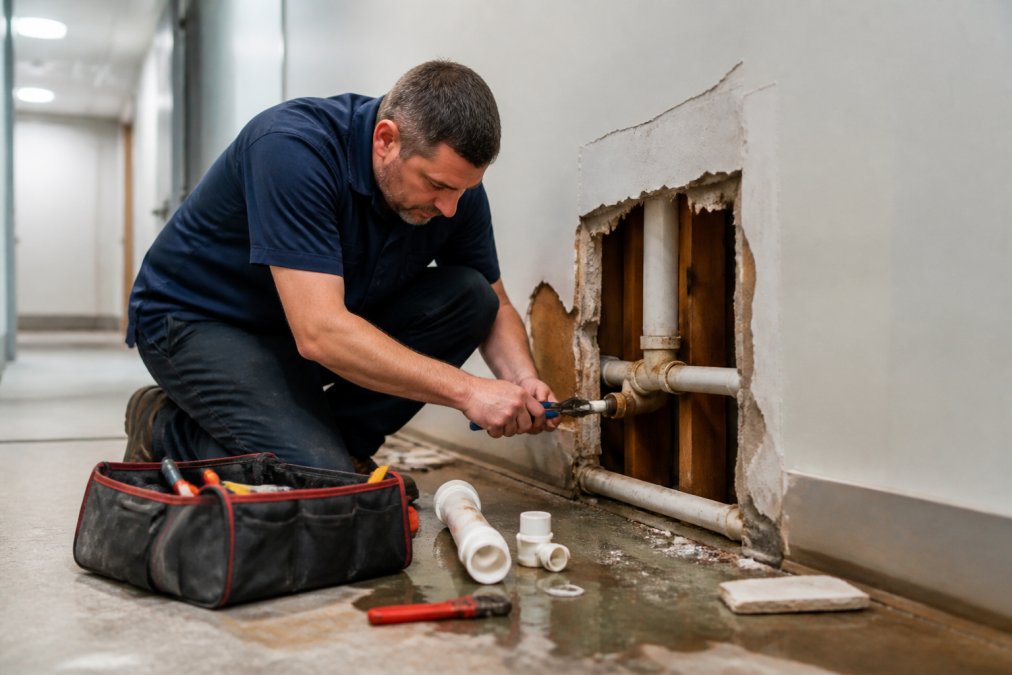
- Plumbing and piping failures: burst lines, sewage backups, failed sump pumps
- Electrical faults: panel failures, exposed wiring, total outages in occupied space
- HVAC breakdowns: loss of heating or cooling in weather that makes the building unusable
- Structural issues: roof leaks, cracked glass, damaged entryways
- Safety hazards: gas odors, elevator entrapment, blocked fire exits
The Occupational Safety and Health Administration guidance on emergency response treats these as hazards that demand a written plan, not improvisation.
Commercial Facility Maintenance Emergency Response: What Fast Actually Means
Fast is not a marketing word. It is a measurable window between your call and a technician standing at the failed asset.
Response Time Benchmarks and What to Expect
Response time is the interval from your initial call to a technician arriving on site. For most commercial emergencies, a reasonable target is same-day arrival, with true after-hours calls handled within a few hours.
Ask every provider to separate two numbers: response time (arrival) and repair turnaround (fix completed). A vendor can arrive in an hour and still take three days to source a part. Both numbers matter for operational continuity.
24/7/365 Availability and After-Hours Dispatch
A genuine 24/7/365 promise means a live person answers at 2 a.m. on a Sunday, not a voicemail box. Emergency dispatch should route directly to an on-call technician who can authorize work.
How to Create a Facility Emergency Response Plan
A facility emergency response plan is a written document that lists who to call, what to shut off, and how to document damage for every foreseeable failure. Build it before you need it.
The Emergency Preparedness Checklist
Use this as a working template. Fill it in, print it, and keep a copy at the front desk and in the mechanical room.
- Emergency contact list: vendor, utility companies, property owner, insurance agent
- Shut-off locations mapped: water main, gas, electrical panels, HVAC
- Floor plans marked with riser rooms and critical assets
- Escalation tree: who authorizes spending, and up to what amount
- Spill kits, flashlights, and PPE staged and inspected quarterly
- Insurance policy number and claims hotline posted
- Post-incident review scheduled within 48 hours
Insurance Documentation Guidance
Insurance claims live or die on documentation. Photograph everything before cleanup begins, including wide shots that establish location.
Keep a running log with timestamps: when the failure started, when you called, when the technician arrived, and what was repaired.
Emergency Maintenance Service Level Agreements: What to Negotiate
An emergency maintenance service level agreement is a contract clause that guarantees specific response times, remedies, and costs for urgent calls. It is where "fast" becomes enforceable.
Cost Estimation Frameworks and Pricing Transparency
Emergency work costs more than scheduled work, and pretending otherwise leads to disputes. Ask providers to quote three separate rates: standard hours, after-hours, and holiday. Get the overtime multiplier in writing.
Most facilities budgets break down like this:
| Cost Component | When It Applies | What to Confirm |
|---|---|---|
| Standard labor rate | Weekday business hours | Hourly rate and minimum call |
| After-hours rate | Nights and weekends | Multiplier over standard |
| Emergency call-out fee | Any dispatched urgent call | Flat fee or waived |
| Parts and materials | All repairs | Markup percentage |
| Diagnostic fee | Initial assessment | Credited toward repair? |
How to Vet a Provider for Fast Emergency Facility Repair Services
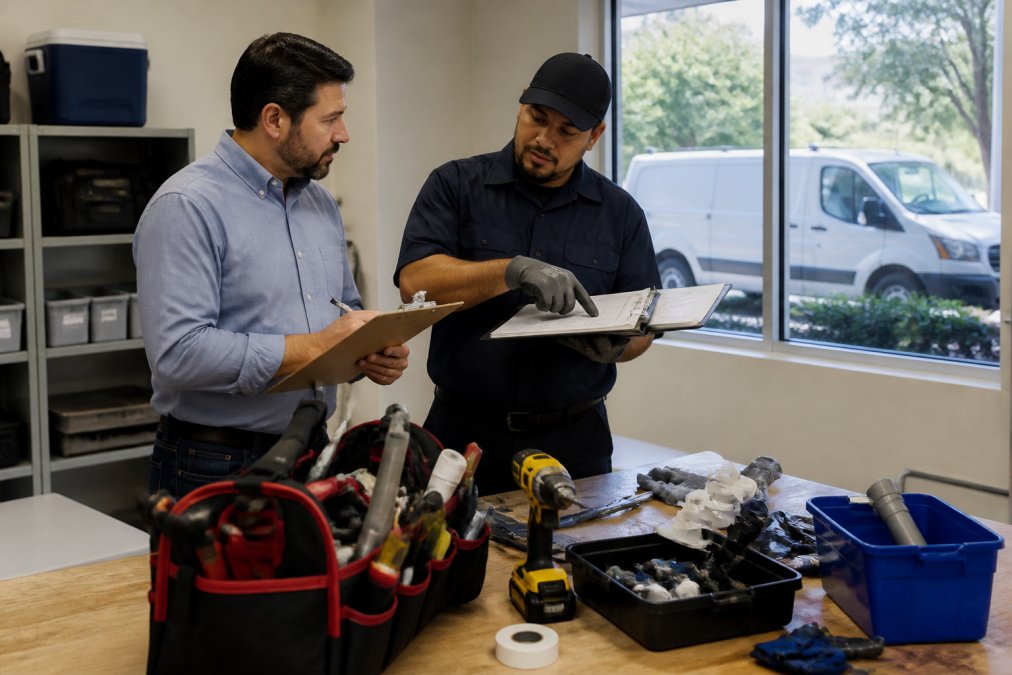
Vetting a provider means verifying licensing, insurance, response capability, and references before an emergency forces the decision. Do this on a calm Tuesday, not during a flood. The goal is to replace marketing claims with evidence you can inspect.
Questions to Ask Before You Sign
Run every candidate through this list. Vague answers are a warning sign.
- What is your guaranteed response time, and what happens if you miss it?
- Do you dispatch your own technicians, or subcontract after hours?
- Can you handle plumbing, electrical, and HVAC under one agreement?
- Who is my single point of contact when something fails?
- Are you fully insured, and can you send a certificate today?
- How do you document work for insurance claims?
- What is your after-hours multiplier, and is the diagnostic fee credited toward the repair?
- Can you provide three references from facilities of similar size and use?
Cost Estimation Frameworks and Pricing Transparency
Emergency work costs more than scheduled work, and pretending otherwise leads to disputes. Ask providers to quote three separate rates: standard hours, after-hours, and holiday. Get the overtime multiplier in writing.
Most facilities budgets break down like this:
| Cost Component | When It Applies | What to Confirm |
|---|---|---|
| Standard labor rate | Weekday business hours | Hourly rate and minimum call |
| After-hours rate | Nights and weekends | Multiplier over standard |
| Emergency call-out fee | Any dispatched urgent call | Flat fee or waived |
| Parts and materials | All repairs | Markup percentage |
| Diagnostic fee | Initial assessment | Credited toward repair? |
Insurance Documentation Guidance
Insurance claims live or die on documentation. Photograph everything before cleanup begins, including wide shots that establish location. Keep a running log with timestamps: when the failure started, when you called, when the technician arrived, and what was repaired. Save invoices, parts lists, and any communication with your provider. A FEMA guide to documenting disaster damage recommends photographing damaged property before repairs and keeping receipts for every expense.
What to Do in the First 60 Minutes of a Facility Emergency
The first hour sets the tone for cost, safety, and your insurance claim. Move through these steps in order.
- Secure the area. Evacuate if there is any safety risk, and call 911 for gas, fire, or electrical hazards.
- Stop the source. Shut off the water main, gas, or affected breaker if you can do so safely.
- Call your provider. Use the emergency line, not the general office number.
- Start documentation. Photograph damage and note the time of each action.
- Notify stakeholders. Alert the property owner, insurer, and any tenants affected.
- Preserve evidence. Do not discard damaged parts or materials until the claim is filed.
Preventative Maintenance: Reducing the Need for Emergency Repairs
Preventative maintenance is scheduled inspection and servicing that catches failures before they become emergencies. It is the cheapest emergency repair you will ever buy, because it never happens.
Energy Efficiency During Repairs
Repairs are the right moment to improve efficiency, not just restore function. When a motor, pump, or compressor fails, replacing it with a higher-efficiency unit lowers long-term operating costs. The U.S. Department of Energy guidance on commercial building efficiency notes that upgrading aging equipment during required repairs captures savings without a separate project budget. Ask your provider to quote both a like-for-like replacement and an efficiency upgrade, then compare the payback.
Building the Program Around Failure Data
A simple priority order works for most buildings:
- Assets that threaten safety if they fail (fire pumps, exit lighting, gas lines)
- Assets that halt operations (main electrical, primary HVAC, water supply)
- Assets that cause property damage if ignored (roof drains, sump pumps)
- Assets that only annoy occupants (cosmetic fixtures, signage)
That is the throughline here: every emergency is a chance to reduce the next one. Facilities that treat repairs as one-off events keep paying for the same failure twice.
Frequently Asked Questions
How fast is emergency maintenance typically expected to be?
Response times vary by provider and contract terms. Many emergency maintenance service level agreements specify an on-site arrival within 2 to 4 hours for critical issues, with some offering same-day service. For after-hours calls, expect dispatch within 30 to 60 minutes. Always confirm response time commitments in writing before signing an agreement.
What specific issues qualify as an emergency facility repair?
Emergencies typically include active water leaks, electrical failures, HVAC breakdowns during extreme temperatures, plumbing backups, and any issue that threatens safety or halts operations. Non-emergencies like a flickering light or slow drain can wait for scheduled service. Your facility emergency response plan should define these thresholds clearly.
How do you vet a provider for emergency facility repair services?
Check licensing, insurance, and bonding first. Ask for references from similar facilities and confirm their after-hours dispatch process. Review their service level agreement for response times, warranty terms, and cost structure. A provider with a single point of contact and month-to-month options reduces your risk.
What steps should be taken immediately when a facility emergency occurs?
First, ensure occupant safety and evacuate if needed. Shut off water or power at the source if safe to do so. Then call your emergency maintenance provider and document the damage with photos for insurance. Follow your facility emergency response plan and keep a log of all communications and actions taken.